EB-2 National Interest Waiver: a green card without an employer.
The national interest waiver lets a qualified professional petition for US permanent residence on their own, with no job offer and no labour certification. It is also one of the most misunderstood routes on the internet, because it is two separate tests, and most of the advice you will read describes only one of them.

Two tests, not one
EB-2 is the second employment-based preference category for US permanent residence. Normally it needs a US employer, a job offer and a labour certification from the Department of Labor proving no suitable US worker is available. The national interest waiver (NIW) removes that requirement: if USCIS agrees it is in the national interest, you can file the immigrant petition, Form I-140, for yourself.
USCIS assesses this in two steps. First, you must qualify for EB-2 at all — either as a member of the professions holding an advanced degree, or as someone of exceptional ability. Only then does it ask whether the job-offer requirement should be waived, applying the three-part framework from a 2016 decision called Matter of Dhanasar. Passing the first test does not get you through the second. A master’s degree makes you eligible to be considered; it is not, on its own, a reason for a waiver.
An approved I-140 is not a green card. It gives you a place in line, dated by your priority date. You can only apply for the green card itself — by adjusting status inside the US or through a US consulate abroad — when a visa number is available for your category and country of birth, which, for EB-2, currently means waiting.
Fees
Quoted after a consultation
EB-2 National Interest Waiver case coordination is scoped work. What it costs depends on your circumstances, how many applicants are involved, and how much preparation already exists — so we look at your case first and then quote it, rather than publishing a number that would be a guess for most people reading it.
Government, embassy, visa application centre, insurance, biometric, bank and other third-party charges are set and collected by those organisations and are always separate from Vizabolt’s professional fee. We confirm the scope and the fee in writing before any work begins — there is no online checkout, and nothing is charged from this website.
Professionals whose work matters beyond their employer.
The waiver is assessed on a proposed endeavour — what you will do in the United States — and on whether you are the person to do it.
Work with a published record, citations, grants or results that others in the field rely on.
Specialists in areas such as energy, infrastructure, AI, cybersecurity or advanced manufacturing, with work others have adopted.
Doctors, public-health specialists and others whose work addresses a recognised US need.
Entrepreneurs whose venture has a specific, evidenced national importance — not just job creation or revenue.
Probably not the right route: Someone whose case rests mainly on holding a master’s degree, owning a profitable business, or having a strong CV in a role that matters chiefly to one employer. Those profiles may still qualify for EB-2 itself, but the waiver asks a harder question, and our first conversation will be honest about which side of it you are on.
What USCIS actually tests.
Step one is eligibility for EB-2. Steps two to four are the three Dhanasar prongs. All four must be met.
EB-2 eligibility: advanced degree or exceptional ability
An advanced degree is a US degree above a bachelor’s, or a foreign equivalent; a bachelor’s plus five years of progressive post-degree experience in the specialty counts as equivalent to a master’s. The degree route also needs the occupation to be a profession. Exceptional ability is the alternative: you must meet at least three of six listed criteria — such as an academic record in the field, ten years of full-time experience, a licence, a salary showing exceptional ability, professional memberships, or recognition for significant contributions — and that ability must relate to the endeavour you are proposing.
The proposed endeavour has substantial merit and national importance
Merit can be in business, science, technology, health, education, culture and other areas. National importance is about the endeavour’s potential prospective impact — broader implications for a field, or significant economic effects — rather than the importance of the profession in general or the benefit to a single employer or client.
You are well positioned to advance it
USCIS looks at your education, skills and record of success, a model or plan for the endeavour, any progress already made, and the interest of potential customers, users, investors or other relevant parties. Letters help only when they say something specific and verifiable.
On balance, waiving the job offer benefits the United States
The final prong weighs whether it would be impractical to require a job offer and labour certification, whether the US would benefit even if qualified US workers are available, and whether the national interest in your contribution is urgent enough to justify skipping the normal process. Discretion applies throughout.
In January 2025 USCIS updated its Policy Manual guidance on NIW petitions, including how it judges national importance and how it weighs letters of support and business plans. Advice written before then may not reflect how cases are assessed now.
Not sure which side of the line you are on?
Tell us your qualification, field and the work you would do in the US. We will say plainly whether it looks worth taking further — including when it does not.
The evidence an NIW case is usually built from.
Every case is different, and the right evidence depends on the endeavour. These are the categories most petitions draw on.
Qualifying for EB-2
- Degree certificates and transcripts, with a credential evaluation for foreign degrees
- Employer letters confirming progressive experience, where relying on a bachelor’s plus five years
- For exceptional ability: evidence against at least three of the six criteria
- Professional licences or memberships where relevant
The proposed endeavour
- A clear written description of what you will do in the US and why it matters nationally
- Supporting data, policy documents or reports showing the problem the work addresses
- For founders: a realistic business plan — treated as one piece of evidence, not the case itself
Being well positioned
- Publications, citations, patents, products, projects or other measurable outcomes
- Independent expert letters that explain specific contributions and their use by others
- Evidence of interest from US institutions, customers, funders or partners
- Awards, grants, media coverage or invitations to judge or speak
The petition package
- Form I-140, filed as a self-petition
- The parts of Form ETA-9089 USCIS currently requires with an NIW petition (Appendix A and the Final Determination form), even though no labour certification is obtained
- Identity and civil documents for you and any family members, needed later for the green card stage
Nothing on this list is requested on our enquiry form. Documents are only ever exchanged inside the secure client portal, after a case has started.
From profile to green card, in order.
The petition and the green card are separate applications, and the wait for a visa number sits between them.
Eligibility read
VizaboltWe review your qualification, record and intended endeavour against both tests, and say whether it is worth taking to an attorney.
Evidence plan and collection
YouYou gather degrees, letters and records; we plan what is needed, chase it and organise it, with your attorney’s direction on the argument.
I-140 filed
YouThe self-petition is filed with USCIS. The filing date becomes your priority date. Premium processing is currently available for NIW petitions.
USCIS decision
US authorityUSCIS approves, denies, or issues a request for evidence that must be answered within its deadline.
Wait for the priority date
US authorityYou can apply for the green card only when the Visa Bulletin shows your priority date is current for EB-2 and your country of birth. The Bulletin has two charts — Final Action Dates and Dates for Filing — and USCIS announces each month which one it accepts for adjustment of status. If a visa number is already available, someone in the US can file the I-485 together with the I-140.
Green card stage
US authorityAdjustment of status (Form I-485) if you are in the US in a qualifying status, or consular processing through the National Visa Center (DS-260) and an immigrant visa interview abroad.
Your spouse and children
Your spouse and unmarried children under 21 can be included as derivatives and receive green cards on the strength of your approved petition. They do not need to qualify for EB-2 themselves. Each applies for the green card stage with you, through adjustment of status or their own DS-260 if processing consularly.
A child’s age is assessed under specific rules, and a long wait for a priority date can bring a child close to 21 before the green card stage. If you have a child aged 17 or over, raise it in the first conversation; it can change how the timing should be planned.
Key limitations
- No one can guarantee an NIW approval. The decision is USCIS’s, and discretion applies even where every prong is argued.
- An advanced degree or a successful business is not, by itself, a basis for the waiver. The national importance of a specific endeavour is.
- An approved I-140 does not give you status, a work permit or the right to live in the US. It reserves your place in line.
- EB-2 is subject to annual limits. In the October 2026 Visa Bulletin no EB-2 chargeability area was current, so approved petitioners wait for their priority date — sometimes for years — and the wait changes month to month.
- Chargeability follows your country of birth, not your nationality or residence. An applicant born in India waits on India’s EB-2 date, even if they hold another nationality and live in Dubai.
- Visa Bulletin positions, USCIS fees and processing times change. We point you to the current official figures rather than quoting them.
Applying from the UAE or the wider GCC
Nothing about the petition requires you to be in the United States. Many NIW applicants file from abroad, and if you are not in the US in a qualifying status when your priority date becomes current, the green card stage runs through consular processing: the National Visa Center collects documents, then you attend an immigrant visa interview. Since November 2025 the State Department has scheduled immigrant visa interviews in the applicant’s country of residence, or of nationality if requested.
When we last checked (16 October 2026), the US Mission to the UAE’s own pages disagreed: its main visa page says routine visa processing is not available in the UAE, while a notice dated 8 August 2026 says limited visa processing is available. Nonimmigrant applicants are told to book in their country of nationality or residence; immigrant visa (green card) interviews follow the State Department’s separate rules. This changes at short notice, so confirm on the Mission’s visa page before anything is planned around a UAE interview.
Nationality can matter at the visa stage. Pakistan was among the 75 countries whose immigrant visa issuance the State Department paused in January 2026; State says that pause is no longer in effect as of 21 August 2026, following a court order. Decisions of that kind can be revisited, so we check the position for your nationality at the point it matters rather than assuming it.
For UAE-based professionals, the hardest part is often the evidence of impact, not the qualification. Work done for a Gulf employer or government entity can be excellent and still be poorly documented in the public record. Building verifiable proof — published results, independent letters, adoption by others — is usually where the time goes.
What Vizabolt does, and what it does not
Vizabolt is a case-coordination service, not a US law firm, and we do not give US legal advice or represent anyone before USCIS or the Department of State. An NIW is a self-petition, and nothing prevents you from filing it yourself, but it is an argued legal case. The legal judgement in a case of this kind — whether it should be filed, how the argument is framed, and the filing itself — belongs with a US-licensed immigration attorney, and we will tell you so at the start rather than after you have committed to anything.
What we do is the work around that judgement: an early, honest read of whether your profile is worth taking to an attorney at all, planning the evidence and the order it needs to be gathered in, chasing and organising documents from the UAE side, keeping the timeline visible, and coordinating with the attorney you instruct so that nothing waits on a missing letter. The scope and our fee are agreed in writing before any work begins.
EB-2 NIW questions.
A master’s degree, or a bachelor’s plus five years of progressive experience, can make you eligible for EB-2. The waiver is a separate test about your specific proposed endeavour, its national importance and whether you are well positioned to advance it. Many people with advanced degrees qualify for EB-2 and still do not meet the waiver.
No. That is what the waiver removes. You file Form I-140 as a self-petition. You do need a credible plan for the work you will do in the US, and evidence that you can carry it out.
Possibly, but owning a business is not the qualification. USCIS looks for a defined endeavour with national importance, not general economic benefit or job creation alone, and it treats a business plan as one piece of evidence among others. If what you want is to run a business in the US, the E-2 or L-1A pages may describe a better fit.
For an NIW it is the date your completed, signed I-140 — with all initial evidence and the correct fee — is properly filed with USCIS. Because EB-2 visa numbers are limited each year, the State Department publishes a monthly Visa Bulletin showing which priority dates can proceed for each country of birth, in two charts (Final Action Dates and Dates for Filing). You can only apply for the green card when your date is earlier than the cutoff in the chart that applies that month.
USCIS currently offers premium processing for NIW I-140 petitions, which shortens its decision clock on the petition. It does not shorten the wait for a visa number, which is set by the Visa Bulletin.
Yes, through consular processing, once your priority date is current. Immigrant visa interviews are normally scheduled in your country of residence (or, on request, nationality); residents of a country where the US is not conducting routine visa operations apply at their designated immigrant visa processing post. When we last checked, on 16 October 2026, the US Mission to the UAE’s pages disagreed — its main page says routine processing is not available, while a notice of 8 August 2026 says limited processing is available — so we confirm the position for your case at that stage.
The law allows a self-petition without a lawyer. In practice it is an argued case, and we recommend a US-licensed immigration attorney for the legal work. Vizabolt coordinates the evidence and the process; we are not a law firm.
Official sources
This page is written from official government and consular sources, not from other advisory websites. Last reviewed 2026-10-16.
- USCIS — Employment-based immigration: second preference (EB-2)
- USCIS Policy Manual — Volume 6, Part F, Chapter 5 (advanced degree, exceptional ability, national interest waiver)
- USCIS — Updated guidance on EB-2 national interest waiver petitions (January 2025)
- USCIS — Form I-140 filing and processing procedures
- USCIS — How do I request premium processing?
- US Department of State — Visa Bulletin
- USCIS — Adjustment of status
- USCIS — Consular processing
- US Department of State — Immigrant visa applicants interviewed in their country of residence
- US Department of State — Immigrant visa processing updates (75-country pause)
- US Embassy and Consulate in the UAE — Visas (current processing status)
Guides worth reading first

E-2 Treaty Investor Visa: Requirements Explained
How the E-2 works: treaty nationality, substantial and at-risk investment, marginality, control, applying by visa or change of status, family and limits.
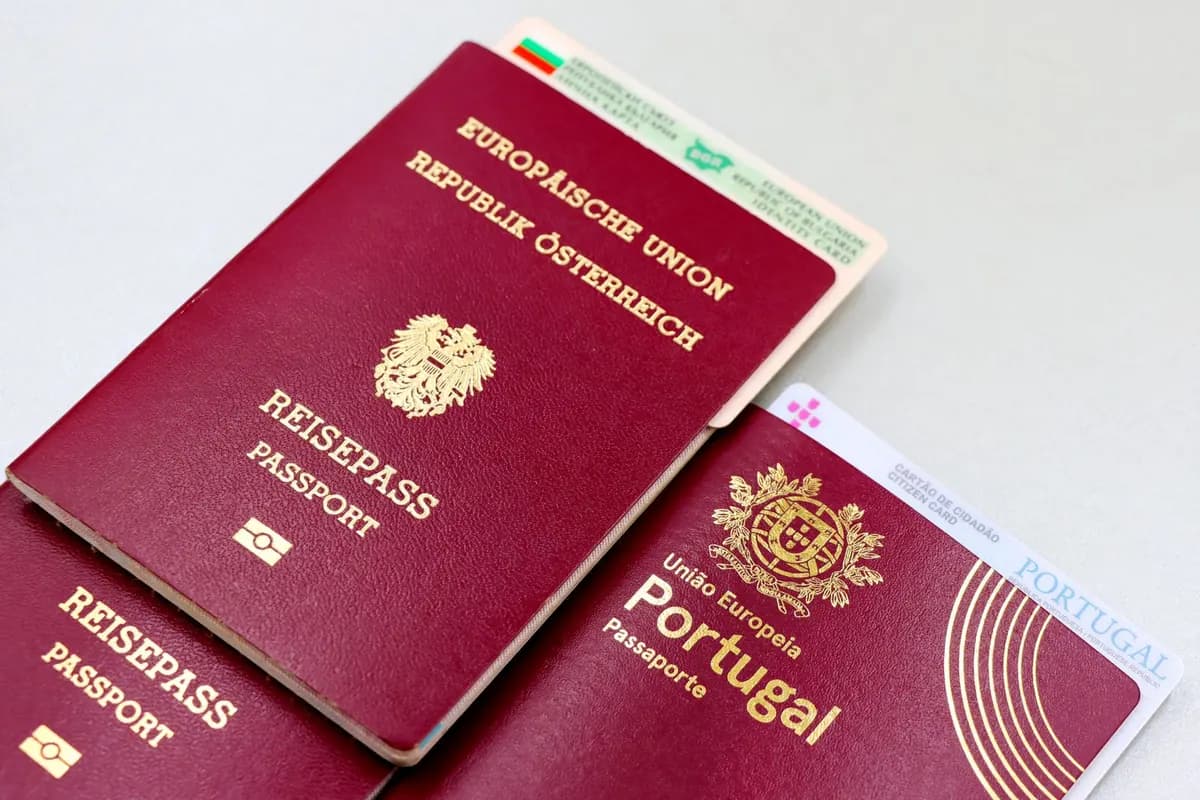
E-2 Visa from the UAE: Why Nationality, Not Residence, Decides
The UAE is not an E-2 treaty country, and UAE residence does not count. Which regional passports are listed, how dual nationals choose, and where to apply.
EB-2 NIW Guide: Dhanasar, the I-140 and the Green Card Queue
How the EB-2 National Interest Waiver works: the Dhanasar test, self-petitioning on Form I-140, the Visa Bulletin queue and the green card stage.
Find out whether an NIW is worth pursuing.
Share your qualification, field and intended work. We will give you a straight answer on both tests and what the evidence would need to show.