The short answer
The E-2 exists only for nationals of countries with a qualifying treaty with the United States, or countries added by legislation. The State Department’s Treaty Countries page and the matching table in the Foreign Affairs Manual (9 FAM 402.9-10) do not list the United Arab Emirates at all, for either E-1 (treaty trader) or E-2 (treaty investor). Saudi Arabia, Qatar, Kuwait, India and Iran do not appear on the list either.
Residence is not a basis for E-2 eligibility. A UAE Golden Visa, a long employment history in Dubai, or a UAE-registered company does not create treaty nationality. What matters is the passport, and then the investment tests explained in our complete E-2 guide.
What the treaty list shows for the region
These nationalities near the Gulf are listed for E-2, with the date the State Department gives for the treaty entering into force (checked 16 October 2026):
- Pakistan — 12 February 1961
- Bahrain — 30 May 2001
- Oman — 11 June 1960
- Jordan — 17 December 2001
- Egypt — 27 June 1992
- The Philippines — 6 September 1955
- Turkey — 18 May 1990
- Morocco — 29 May 1991
- Bangladesh — 25 July 1989
- Sri Lanka — 1 May 1993
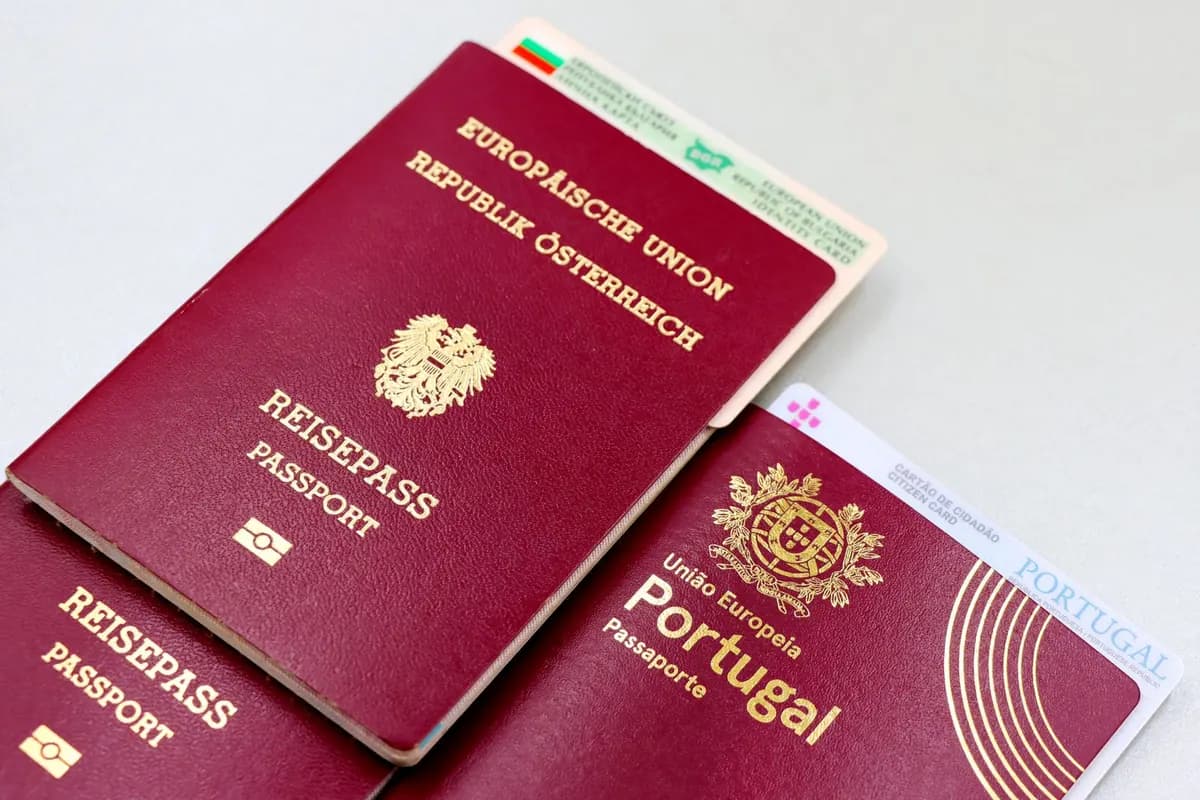
Some countries were added by legislation rather than treaty: Israel for E-2 from 1 May 2019, subject to reciprocity, and Portugal for E visas from 15 March 2024. The United Kingdom is listed, but the Foreign Affairs Manual notes that the entry applies only to UK nationals, not to other Commonwealth nationals. The list changes over time, so read the current version rather than relying on any copy of it, including this one.
Why residence, and where the company is registered, do not count
The Foreign Affairs Manual and the regulation (8 CFR 214.2(e)) say the investor must possess the nationality of the treaty country, and that nationality is determined by the authorities of that country. Residence is not a basis for it, and neither is the country where a business is incorporated.
So a Pakistani national who has lived in Abu Dhabi for decades is assessed as a Pakistani national. An Indian national with the same history cannot use the E-2, because India is not on the list. Holding a business in a UAE free zone does not alter either result.
If you hold a second nationality
A second passport from a treaty country can be the one that qualifies, because nationality is what is tested. The FAM sets a firm condition: apart from a 50/50 business owned by nationals of two treaty countries, a business can have only one qualifying nationality. A dual-national owner must choose which nationality to use, and the owner and any E employees of that business must all hold the same nationality for E purposes.
In practice that means deciding early which passport the company will be built around, and keeping the ownership records, the application and the employees consistent with it.
How the business’s own nationality is worked out
The US business must itself have the treaty nationality. At least 50 percent of it must be owned by people who hold the treaty country’s nationality, and ownership is traced to the ultimate individual owners, not stopped at a holding company. Shares held by US lawful permanent residents do not count towards treaty ownership.
This matters for Gulf-based investors who hold assets through a UAE company or invest with partners of other nationalities. A company owned through a UAE entity is looked through to the people behind it, and a partner who is not a national of your treaty country reduces the treaty-national share.
Where a UAE resident with a treaty passport applies
The State Department says to book, generally, at the embassy or consulate in the country where you live. You may apply at any post, but it may be difficult to qualify outside your place of permanent residence, and each post sets its own steps. Abu Dhabi and Dubai appear on its list of nonimmigrant visa posts.
For some applicants that will mean applying in their country of nationality instead. The Mission’s visa page also refers to Presidential Proclamation 10998, effective 1 January 2026, which suspends or limits visa issuance for nationals of 39 countries and for Palestinian Authority document holders; check whether it affects your nationality before you commit funds.
If your passport is not on the list
Two routes on this site do not depend on treaty nationality. Neither is a substitute you can simply switch to; each has its own tests.
- The L-1A: a petition filed by a US employer that has a qualifying relationship (parent, branch, subsidiary or affiliate) with a foreign company that has generally employed you for one continuous year in the previous three. The USCIS page states no nationality requirement, although Proclamation 10998 (above) can still affect visa issuance. It fits people who already run or manage an operating business outside the US. Our L-1A guide covers it in depth.
- The EB-2 national interest waiver: an immigrant (permanent residence) category for professionals with an advanced degree or exceptional ability, who may self-petition without an employer. There is no investment test and no treaty requirement. It fits people whose work itself is the case, not their capital. See our EB-2 NIW guide.
Whether either fits depends on your own record. Vizabolt coordinates US cases but is not a US law firm and does not give US legal advice; these are argued cases, and we recommend a US-licensed immigration attorney for the legal work. If your passport is listed and you want help organising an E-2 file, our E-2 treaty investor page explains what we do.
Questions people ask
Does a UAE Golden Visa help with an E-2? No. It is a residence status, and E-2 eligibility depends on nationality.
My spouse holds a treaty passport and I do not. Can we still use E-2? The E-2 investor must hold the treaty nationality, and so must at least half of the business’s ownership. Dependants of an E-2 investor do not need to share the investor’s nationality.
Can I own the US company through my Dubai company? Ownership is traced to the ultimate individual owners, so what counts is the nationality of the people behind the UAE company.
Is the UAE likely to be added? We cannot say. Only the State Department’s current Treaty Countries page answers whether a country is listed.
Official sources (checked 16 October 2026)
- Treaty Countries — US Department of State
- 9 FAM 402.9, Treaty Traders and Treaty Investors — US Department of State
- 8 CFR 214.2(e) — Electronic Code of Federal Regulations
- Treaty Trader and Investor Visa (E) — US Department of State
- E-2 Treaty Investors — USCIS
- List of nonimmigrant visa posts — US Department of State
- Visas — US Embassy and Consulate in the UAE
- Resumption of Routine Visa Services notice — US Embassy and Consulate in the UAE
- L-1A Intracompany Transferee Executive or Manager — USCIS
- Employment-Based Immigration: Second Preference EB-2 — USCIS