E-2 Treaty Investor: run your own business in the United States.
The E-2 lets a national of a treaty country invest in a US business and live in the US to develop and direct it. It turns on your passport, not where you live. A Pakistani national in Dubai may qualify. An Emirati national cannot, because the UAE has no E-2 treaty with the United States.

An investor visa that depends on your nationality
E-2 is a nonimmigrant visa for nationals of countries that have a treaty of commerce and navigation with the United States. The investor puts a substantial amount of their own capital at risk in a real, operating US business, owns at least half of it or controls it, and comes to the US to develop and direct it.
There is no published minimum investment. The amount has to be substantial in relation to the total cost of buying or establishing that particular business, so a smaller business needs a higher proportion of its cost invested. It also has to be committed, not sitting in an account waiting for the visa.
E-2 is temporary. It can be renewed while the business continues to qualify, but it does not lead to a green card by itself, and you must intend to leave the US when your E-2 status ends.
Fees
Quoted after a consultation
E-2 treaty investor case coordination is scoped work. What it costs depends on your circumstances, how many applicants are involved, and how much preparation already exists — so we look at your case first and then quote it, rather than publishing a number that would be a guess for most people reading it.
Government, embassy, visa application centre, insurance, biometric, bank and other third-party charges are set and collected by those organisations and are always separate from Vizabolt’s professional fee. We confirm the scope and the fee in writing before any work begins — there is no online checkout, and nothing is charged from this website.
Treaty nationals who want to run a US business.
The passport comes first. If your nationality is not on the treaty list, the rest of this page does not apply to you.
Pakistan has had an E-2 treaty with the US since 1961. Living in the UAE or Saudi Arabia does not affect that.
Nationals of countries on the State Department’s list — including Bahrain, Oman, Jordan, Egypt and the Philippines.
Investors acquiring an operating US business, such as a franchise, restaurant, logistics or service company.
Entrepreneurs establishing a new US company with funds committed and operations underway.
Probably not the right route: Nationals of the UAE, Saudi Arabia, Qatar, Kuwait or India, which are not on the E-2 treaty list, and anyone looking for a passive investment. UAE residence — including long-term UAE residence visas — and UAE business ownership do not create E-2 eligibility. For non-treaty nationals, the L-1A is often the route to consider.
The E-2 requirements.
From the State Department and USCIS. Each is tested separately.
Treaty nationality — yours and the business’s
You must be a national of a treaty country, and at least 50 percent of the US business must be owned by nationals of that same country. Nationality means your passport; residence in another country does not count.
A substantial investment, at risk
The investment must be substantial in proportion to the total cost of the business and enough to ensure its successful operation. The funds must be at risk in the commercial sense, subject to loss if the business fails, and irrevocably committed. Uncommitted funds in a bank account do not count.
A real and operating enterprise
The business must be an active commercial undertaking producing goods or services for profit. Speculative or idle investments, such as undeveloped land or holding shares, do not qualify.
Not marginal
The business must have the present or future capacity to generate more than a minimal living for you and your family, or to make a significant economic contribution in the US. Future capacity should generally be realisable within five years of the business starting normal operations. A business that can only ever provide a living for the investor is marginal.
You develop and direct it
You must be coming to the US solely to develop and direct the enterprise, shown by owning at least 50 percent or having operational control through a managerial position or other means.
Lawful source of funds, and intent to depart
You must show where the investment money came from and that it was not obtained from criminal activity. You must also intend to leave the US when your E-2 status ends.
Is your nationality on the treaty list?
Tell us the business you have in mind. In the consultation we check treaty eligibility first, then whether the plan looks substantial and non-marginal.
What an E-2 application is usually built from.
An investor applying at a US consulate completes Form DS-160, which includes the E-visa questions (Form DS-156E is for E-2 employees, not the investor). The evidence below is typical.
Nationality and ownership
- Passport showing treaty-country nationality
- US company formation documents and ownership records showing at least 50% treaty-national ownership
- Operating agreement or shareholder documents showing your control
The investment
- Proof the funds have been invested or irrevocably committed: purchase agreements, leases, equipment, inventory, payroll, escrow
- Bank records showing the funds moving from you to the business
- Total cost of the business, to show the investment is proportionate
Source of funds
- Salary records, business income, sale of property or shares, gifts or loans, traced through bank statements
- For UAE income: employment contract, salary certificate and statements; for business proceeds, company accounts
- An explanation of any transfer through other jurisdictions or currencies
The business
- A business plan with realistic hiring and revenue projections, showing it is not marginal
- Evidence the business is operating or about to operate: premises, licences, contracts, a website, suppliers
- Your CV, showing you can develop and direct it
Nothing on this list is requested on our enquiry form. Documents are only ever exchanged inside the secure client portal, after a case has started.
How an E-2 case usually runs.
Applicants outside the US apply at a US consulate; someone already in the US in lawful nonimmigrant status can instead ask USCIS for a change of status on Form I-129. Either way, the business is set up before the application, not after.
Treaty and fit check
VizaboltWe confirm your nationality is on the treaty list and that the business idea can meet the substantial and non-marginal tests.
Set up or acquire the business
YouYou form the US company, commit funds and begin operations, with US legal and accounting advice.
Source of funds and file
VizaboltThe trail of your funds and the business evidence are organised into one coherent file.
Application submitted
YouYou complete the DS-160 (with its E-visa section) and submit the E-2 package as the consulate requires.
Consular interview
US authorityA consular officer interviews you and decides the application.
Entry and renewal
US authorityYou enter the US in E-2 status; renewals depend on the business continuing to qualify.
Your spouse and children
Your spouse and unmarried children under 21 can accompany or join you as E-2 dependants. They do not need to share your nationality. Spouses in E-2 status are considered employment-authorised incident to status, so a spouse can work in the US. Children can attend school but cannot work.
A child who turns 21 loses dependant status and needs their own status to remain in the US, which is worth planning for early with older children.
Key limitations
- E-2 is only for treaty nationals. UAE nationality is not on the treaty list, and UAE residence does not count.
- There is no fixed minimum investment, and no investment amount guarantees approval. The test is proportionality and whether the business can succeed.
- E-2 is temporary and does not lead to a green card by itself. You must intend to depart when your status ends.
- Status lasts only as long as the business qualifies. Initial admission is up to two years, with extensions in increments of up to two years; the visa itself may be valid for longer, depending on your nationality.
- You must develop and direct the business. Passive investment, or a role that is only nominal, does not qualify.
- No one can guarantee a consular decision. Fees and processing times are set by the State Department and change; we link to the current figures rather than quoting them.
E-2 from the Gulf: nationality first
For a GCC audience, the first question is not money but passport. On the State Department’s treaty list, Pakistan, Bahrain, Oman, Jordan, Egypt and the Philippines have E-2 treaties with the US. The UAE, Saudi Arabia, Qatar, Kuwait and India do not. Someone who holds two nationalities can use a treaty nationality, provided the business ownership matches it.
For Pakistani nationals, the State Department’s reciprocity schedule sets how long an E-2 visa can be issued for and how many entries it allows. The visa’s validity is separate from the period of stay granted at entry.
When we last checked (16 October 2026), the US Mission to the UAE’s own pages disagreed: its main visa page says routine visa processing is not available in the UAE, while a notice dated 8 August 2026 says limited visa processing is available. Nonimmigrant applicants are told to book in their country of nationality or residence; immigrant visa (green card) interviews follow the State Department’s separate rules. This changes at short notice, so confirm on the Mission’s visa page before anything is planned around a UAE interview.
Source-of-funds evidence is where Gulf-based applicants most often need preparation. Years of salary paid in dirhams, end-of-service benefits, property sales in Pakistan or business proceeds in the UAE can all be legitimate sources, but each needs a clear paper trail through bank records to the US business.
What Vizabolt does, and what it does not
Vizabolt is a case-coordination service, not a US law firm, and we do not give US legal advice or represent anyone before USCIS or the Department of State. An E-2 application is a consular application, and the business it rests on needs US legal and accounting advice of its own. The legal judgement in a case of this kind — whether it should be filed, how the argument is framed, and the filing itself — belongs with a US-licensed immigration attorney, and we will tell you so at the start rather than after you have committed to anything.
What we do is the work around that judgement: an early, honest read of whether your profile is worth taking to an attorney at all, planning the evidence and the order it needs to be gathered in, chasing and organising documents from the UAE side, keeping the timeline visible, and coordinating with the attorney you instruct so that nothing waits on a missing letter. The scope and our fee are agreed in writing before any work begins.
E-2 investor questions.
Pakistan is an E-2 treaty country, so your nationality qualifies. Living in Dubai does not change that. You still need to meet every other requirement: a substantial investment at risk in a real, non-marginal US business that you own or control and will develop and direct.
No. E-2 depends on nationality, not residence. The UAE is not on the E-2 treaty list, and residence status in the UAE has no bearing on E-2 eligibility.
There is no legal minimum. The investment must be substantial relative to the total cost of the particular business and sufficient to make it work. A lower-cost business generally needs a higher proportion of its cost invested. Anyone quoting a fixed minimum is giving you a rule of thumb, not the law.
Not entirely. The funds must be at risk and irrevocably committed to the business. Money that is uncommitted or revocable in a bank account is generally not considered an investment. Escrow arrangements conditional on the visa are commonly used to manage this risk; a US attorney should structure them.
Not by itself. E-2 is temporary and requires an intention to leave when your status ends. Permanent residence would need a separate immigrant route.
Yes. Spouses in E-2 status are considered employment-authorised incident to status. Dependants do not need to share your nationality.
Nonimmigrant visa applicants should book in their country of nationality or residence. When we last checked, in October 2026, routine visa processing in the UAE was not available, so a Pakistani national resident in the UAE may need to apply in Pakistan. We confirm the right post for E visas at the time.
Official sources
This page is written from official government and consular sources, not from other advisory websites. Last reviewed 2026-10-16.
- US Department of State — Treaty countries
- US Department of State — Treaty trader and treaty investor visas (E)
- USCIS — E-2 treaty investors
- 8 CFR 214.2(e) — Treaty traders and investors (eCFR)
- US Department of State — Reciprocity schedule: Pakistan
- USCIS Policy Manual — Volume 10, Part B, Chapter 2 (employment authorised incident to status)
- US Department of State — Nonimmigrant visa applicants: country of nationality or residence
- US Embassy and Consulate in the UAE — Visas (current processing status)
Guides worth reading first

E-2 Treaty Investor Visa: Requirements Explained
How the E-2 works: treaty nationality, substantial and at-risk investment, marginality, control, applying by visa or change of status, family and limits.
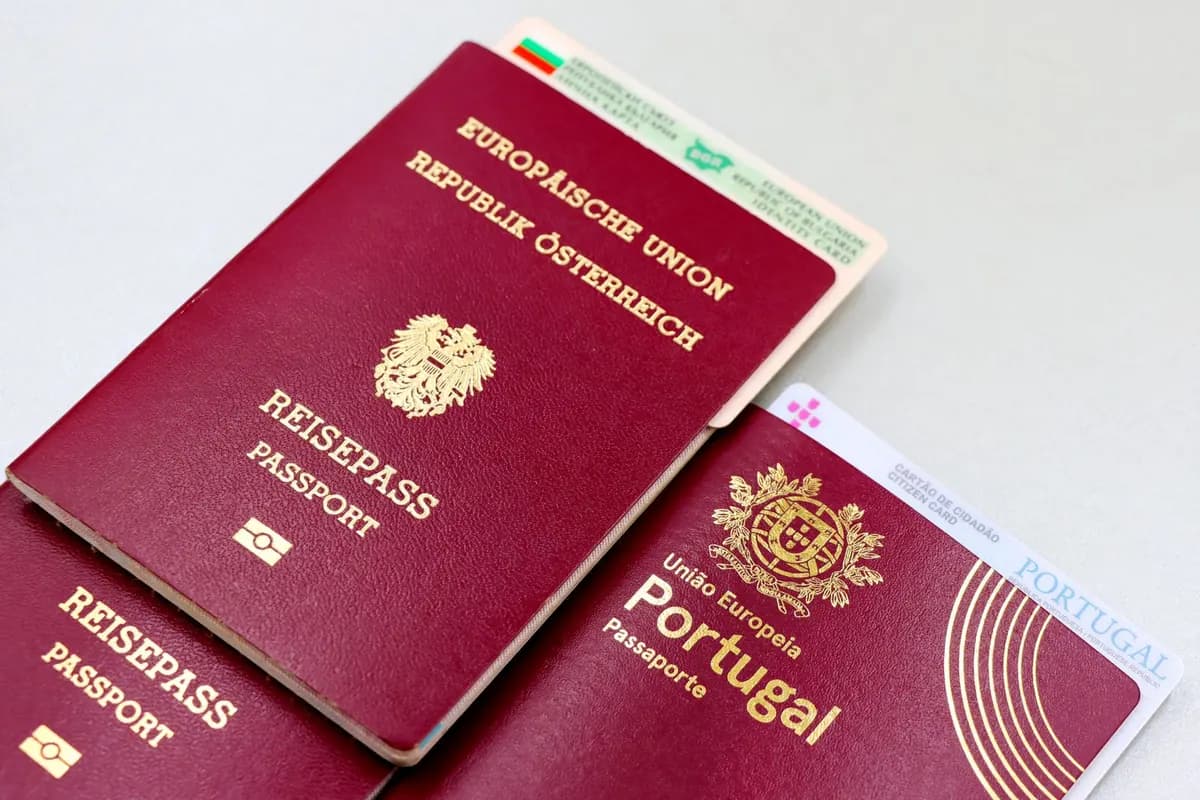
E-2 Visa from the UAE: Why Nationality, Not Residence, Decides
The UAE is not an E-2 treaty country, and UAE residence does not count. Which regional passports are listed, how dual nationals choose, and where to apply.

EB-2 NIW, L-1A or E-2: Which US Route Fits?
A decision guide to three US routes: who each one fits, nationality limits, how long each lasts, family work rights and how they lead on to a green card.
Related services
Start with treaty eligibility.
Tell us about the business you have in mind. In the consultation we check treaty eligibility first, then whether the plan can meet the substantial and non-marginal tests.